


Meet The Author of Caricature Drawing Made Easy!
There's just one week to go until the release of Caricature Drawing Made Easy! We celebrated the upcoming publication of this fun book by sitting down with author Melissa Lee to discuss everything caricature; learn where she draws inspiration from (no pun intended), how she distilled the essential features of caricature art down into one book and what her hopes are for the future of this unique medium.
Tell us a little bit about yourself?
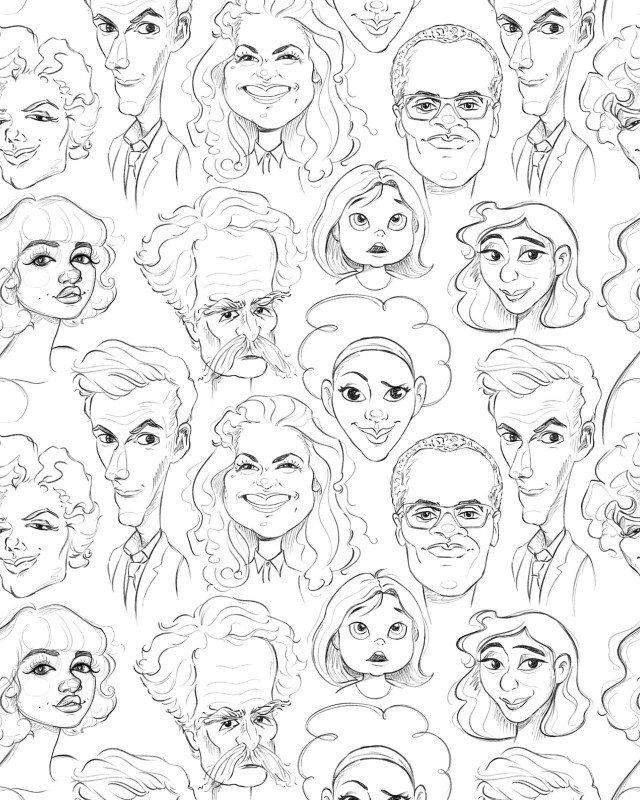
Hi! I'm Melissa, an illustrator and surface pattern designer based in Northern California, in a small town near Sacramento. I do a bit of everything; freelance work, quilting fabric design for Riley Blake Designs, art licensing, and I'm a Top Teacher on Skillshare, where I teach classes on everything from how to make technically repeating patterns to caricature and even watercolor painting.
Often, the advice you see from professional artists is to niche down or have a single signature style, but clearly, I don't know how to do that. My surface design work is much different from my character art, for example, but I enjoy all of the things that I do so much that I've found a way to sort of sprinkle them here and there throughout my career, and teaching is one of the ways I've been able to do that. I'm not a hugely successful surface designer (yet), so it may not be the best advice, but it's also what led me to getting to create a book with David & Charles, so like…follow your heart, maybe?
Tell us a bit about Caricature Drawing Made Easy?
With Caricature Drawing Made Easy, I really wanted to create something approachable and fun that breaks down what can feel like a very intimidating art form into, hopefully, manageable, confidence-building exercises.
The book walks you through the fundamentals of understanding facial proportions, identifying key features to exaggerate, and ways to start developing your own style, with lots of step-by-step examples and practice prompts. It's playful, it's practical, and hopefully it helps people discover just how fun and expressive this art form can be!
What was the creative process like as you developed this book?
Because I'd made quite a few online classes, I thought I had a pretty good idea of how long this would take. I could recycle a lot of the foundational content and rework my course scripts for the book. Plus, no filming or editing videos! Easy, right?
Wrong. Turns out my course scripts are way more conversational than what works for a polished book. A lot of my foundational drawings were six or seven years old and needed updating because—spoiler alert—I've improved a lot since then! Finding royalty-free or public domain images of a diverse range of people took time and research. Figuring out how to save step-by-step process images for print when I was used to just recording myself drawing took time. And knowing I couldn't edit the book once it was printed made me obsess over getting everything as polished as possible.
Let's just say, the month leading up to my deadline was crunch time city. I had a few all-nighters carefully shading Mark Twain's exaggerated face, let me tell you. All that said, it was such a joy to make! And I couldn't have done it without the wonderful team at David & Charles.
What is your favourite part of the book?
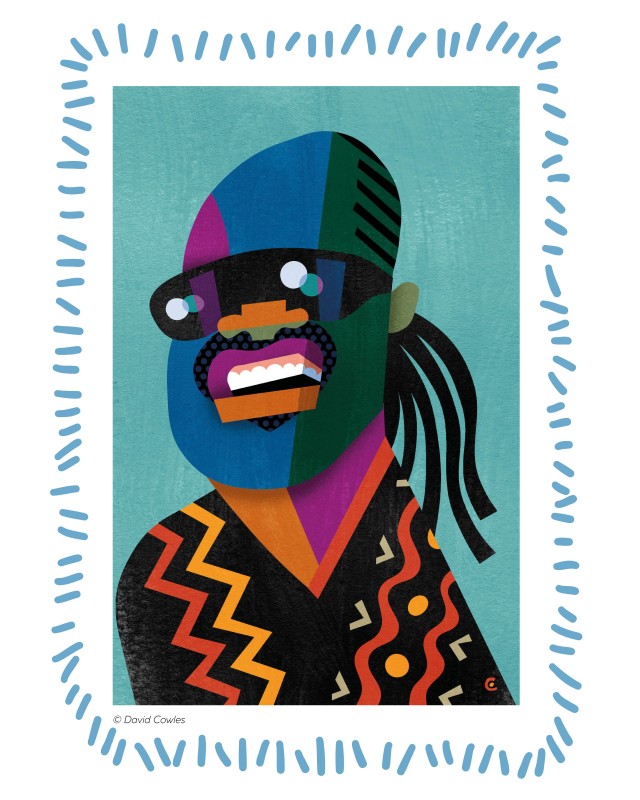
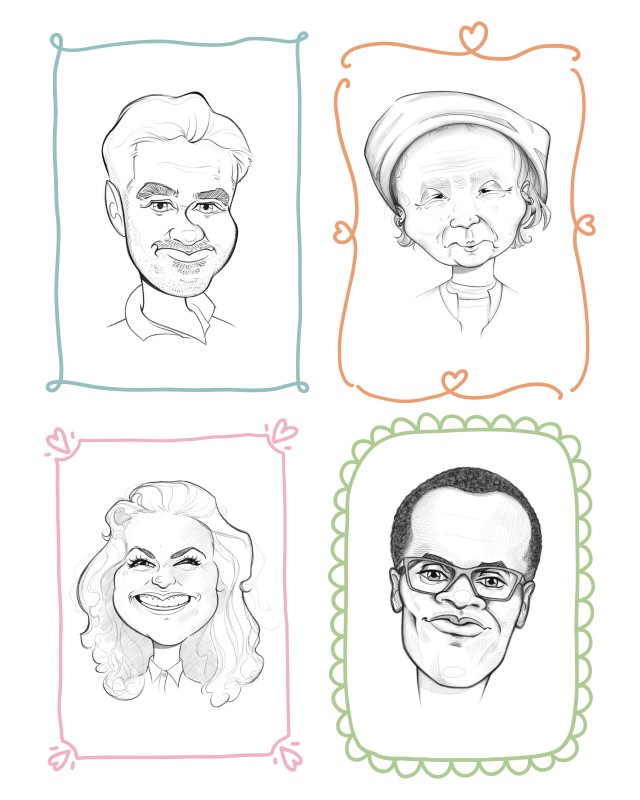
One thing I'm really proud of is that I included demos of two different styles of caricatures—the more simplified live caricature approach and the more anatomically rendered style. It was important to me to include both so that readers could get a fuller picture of the art form and figure out what resonates with them, rather than just learning one way of doing it. My favorite caricature I made for the book is my drawing of Marilyn Monroe. She's got this sassy, almost-winking-at-the-camera vibe that I love. Most caricatures of her lean super heavily into the sex symbol image, which makes sense and I'm not knocking that choice, but she was such an interesting, funny, and layered person, and I wanted to celebrate that side of her more.
What was your route into caricature art?
For a long time, I thought I wanted to be a character designer for games or animation. But after interning at a video game company for a couple of years just out of college, I realized I really only wanted to make my own characters on my own terms. I wanted to keep learning, though, and because character design and caricature are so intertwined, that's when I fell down the caricature rabbit hole. I took every course and workshop I could find, both online and in person.
Eventually, I felt confident enough to start teaching it myself, though honestly, I also started teaching to push myself to improve, because if I was going to teach it, I had to hold myself to a higher standard. That journey has been so incredibly rewarding and is what ultimately led to this book being made.
It's funny, I don't consider myself an expert in the field by any means, which does feel a little intimidating, because like, who am I to teach this art form when there's such a rich, diverse community of incredible caricature artists out there with way more professional experience than me? But the truth is, I don't claim to be a world-renowned expert, just someone with an immense passion for the art form and a genuine drive to share what I've learned. My journey has involved studying and learning from the greats, figuring out what works for me through careful observation and lots of trial and error, and most importantly? Tons and tons of practice!
Where do you look for inspiration?
Most of my inspiration comes from animals and nature (dinosaurs included!), insects (especially bees and moths), anything sci-fi and fantasy (big Lord of the Rings nerd here), space, witchy things, and of course, people. Which is kind of essential when you're a caricature artist!
Faces are one of the most fun things to draw—there's just so much to work with! The variety of human features is endlessly inspiring to me. I love that if you sat down ten artists and asked them to caricature the same person, you'd get ten vastly different interpretations of that exact same face. You are somewhat limited by the need to maintain likeness (depending on your style), but even within those constraints, people will come up with completely different approaches. That is so cool to me.
Two of my biggest personal influences are Stephen Silver and Court Jones, who are both featured and credited in the book because I've learned the most from them. They're both incredible artists with vastly different styles. I think you can see a bit of Silver's shape language in my work, and some of the rendering finesse I picked up from Jones.
What is the most challenging thing about being an artist?
Imposter syndrome. I feel like this is true for any creative person, whatever your chosen medium. I’ve learned that you can’t expect it to go away once you’ve reached a certain point of skill or experience, because that just isn’t true for most people. You have to learn to manage it healthily, not push it away. Acknowledge it and let yourself feel your feels, but don’t let it control you.
What makes up for the challenges?
I get paid to draw. Being a solo entrepreneur is tough. Having to wear so many different hats and still find time to enjoy the creative process can be very difficult, but at the end of the day, I get to make art for a living, and I don’t take that for granted.
What do you think the “Next Big Thing” in caricature will be?
This is a tricky one. I think the “Next Big Thing” is actually what's already happening—caricature artists building amazing communities online (shout out to the ISCA and Women In Caricature!) and being more generous with sharing their knowledge, making it more accessible for people to learn. When I started learning, resources were harder to find. Now there are so many artists teaching, sharing their processes, and lifting each other up. That collaborative energy is creating this whole new wave of talent, and I think that's what's going to push the art form forward.

Who (dead or alive) would you invite to the perfect caricature retreat?
Well, first off, all of the artists that I feature in the book. So, in no particular order, that’s Court Jones, Stephen Silver, David Cowles, David Dunstan, Leonardo da Vinci, Ash Stryker, Kelly O’Brien, Marietta Williams, Sam Gorrie, Hitomi Ishihara, Maria Picassó Piquer, and Lindsey Olivares. And then also Pablo Lobato, Tom Richmond, Mort Drucker, Al Hirschfeld, and Angie Jordan. Quite a crew!
What advice would you give to your beginner self?
Mindfulness and mindset are so much more important than you think. Protect your mental health, be kind to yourself on hard days, and remember that your worth isn't tied to your output. Your seasons will change. Your energy levels will fluctuate, your productivity will ebb and flow, and what excites you creatively won't always stay the same. And that's okay. Give yourself permission to evolve. Stay curious, stay flexible, and trust yourself through those transitions.
In one word, how would you describe this book?
Encouraging
Dive into the creative world of caricature art and preorder Caricature Drawing Made Easy today at the link here! 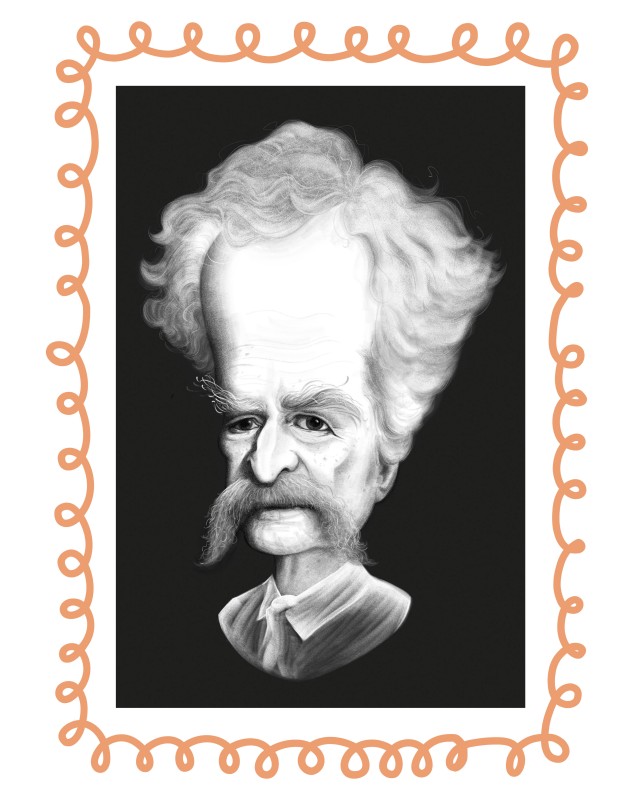
About the Author
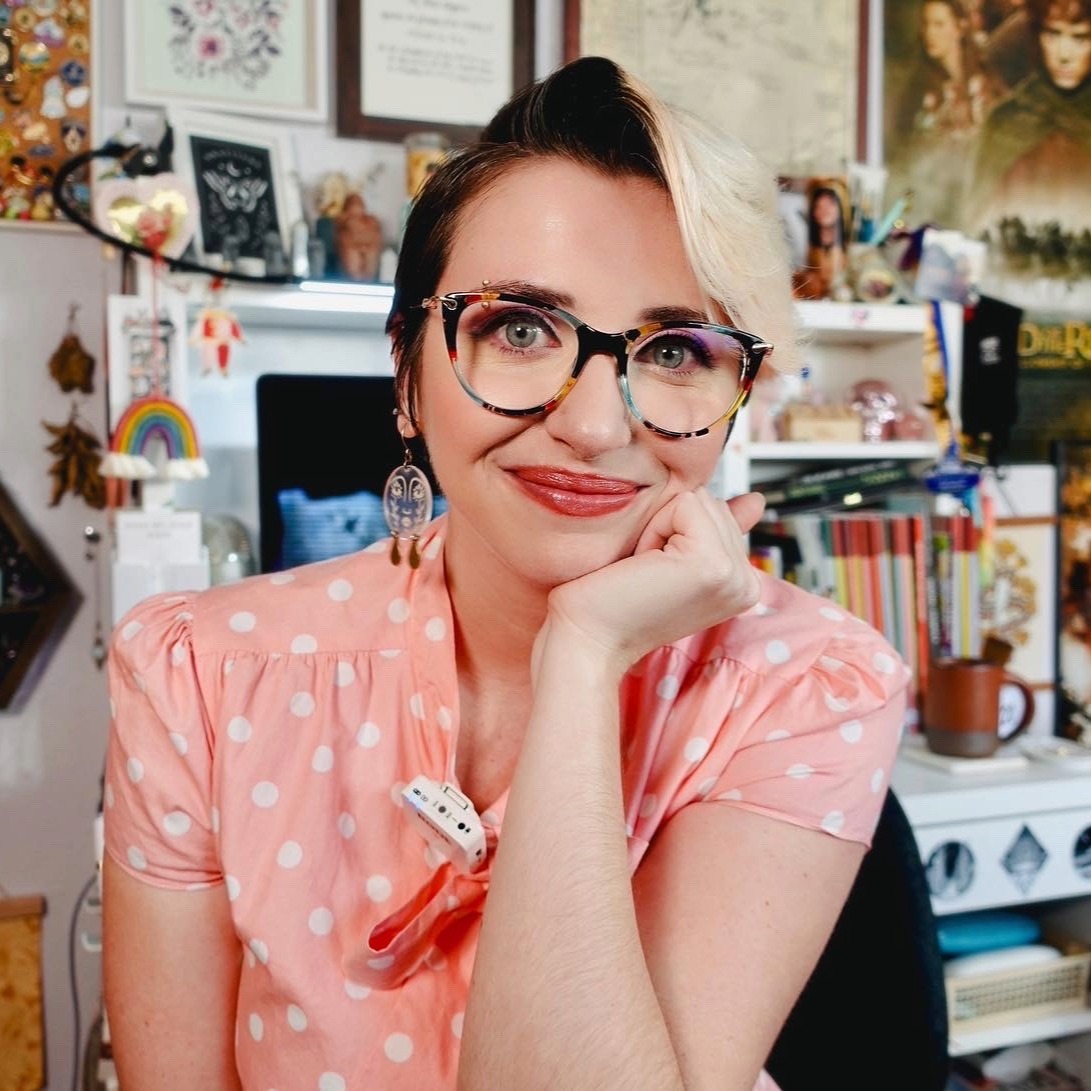
Melissa Lee
Melissa Lee is an illustrator and surface designer living in the hilly forests of Northern California....