

Interview With Ana-Maria, Author of Interlocking Crochet!
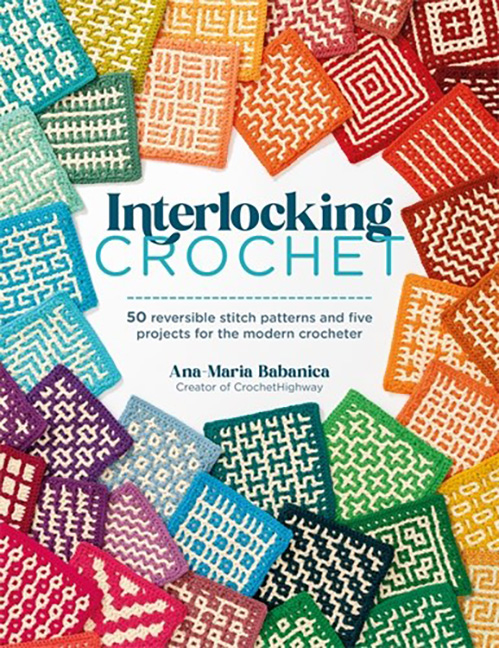
Step into a world of colourful crochet with Interlocking Crochet!
Bursting with 50 reversible patterns and five vibrant projects, this book will add a splash of fun to your crafting. As Interlocking Crochet takes social media by storm, we sat down with author Ana-Maria to chat all about her creative process, where she found inspiration for this unique book and more!
Tell us a little about yourself.
I’m Ana-Maria, a Romanian crochet designer and pattern writer. I’ve been crocheting since 2008 and founded my brand, CrochetHighway, in 2021. My work lives at the intersection of art and mathematics, and I’m particularly drawn to techniques that produce intricate, eye-catching results through surprisingly simple means.
Tell us a bit about Interlocking Crochet?
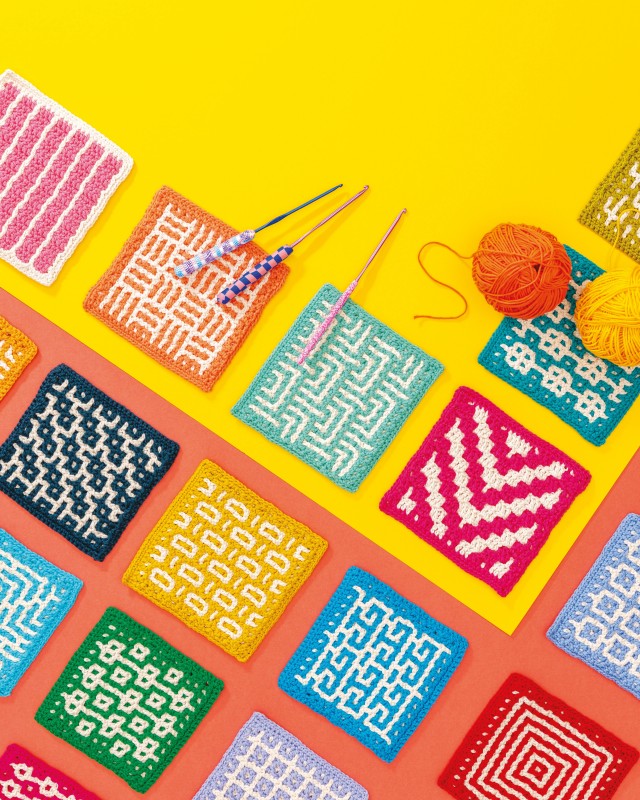
Interlocking Crochet is, in my opinion, a comprehensive guide to one of the most exciting techniques in crochet. It contains 50 reversible stitch patterns, each presented with clear step-by-step instructions and detailed photography, as well as five garment and accessory projects that put those stitches into practice. Whether you’re an adventurous beginner or an experienced crocheter looking for a new challenge, the book meets you where you are and gives you everything you need to master the technique with confidence.
For those who have never heard of it, what exactly is interlocking crochet and why is this technique so great?
Interlocking crochet works by simultaneously constructing two layers of simple mesh fabric and locking them together as you go. You only ever work with one color at a time, which keeps things manageable, and the result is a fabric that is reversible by design. Some stitch patterns produce matching motifs on both sides, while others reveal an entirely different pattern when flipped over. And the best part is that the only stitches involved are double crochets and chains. The intricacy you see in the finished fabric comes entirely from how those stitches are arranged.

How does interlocking crochet simplify working with colors when compared to other methods?
With techniques like tapestry crochet or intarsia, you either carry inactive yarn along as you work, or you deal with multiple yarn sources in a single row, which means that you have to manage tension across multiple strands and accept that the back of your fabric may sometimes look unfinished. Mosaic crochet is simpler in that regard, but you’re still creating a fabric that looks pretty on just the one side, rather than simultaneously constructing two layers.
Interlocking crochet does away with all of that. You work with one color at a time, there are no floats, no yarn to carry, and no wrong side to hide or worry about. Both sides of the fabric are equally neat and complete. For anyone who has ever felt intimidated by colorwork, interlocking crochet is a very good place to start.
What inspired you to write this book, and how does it differ from other crochet books out there?
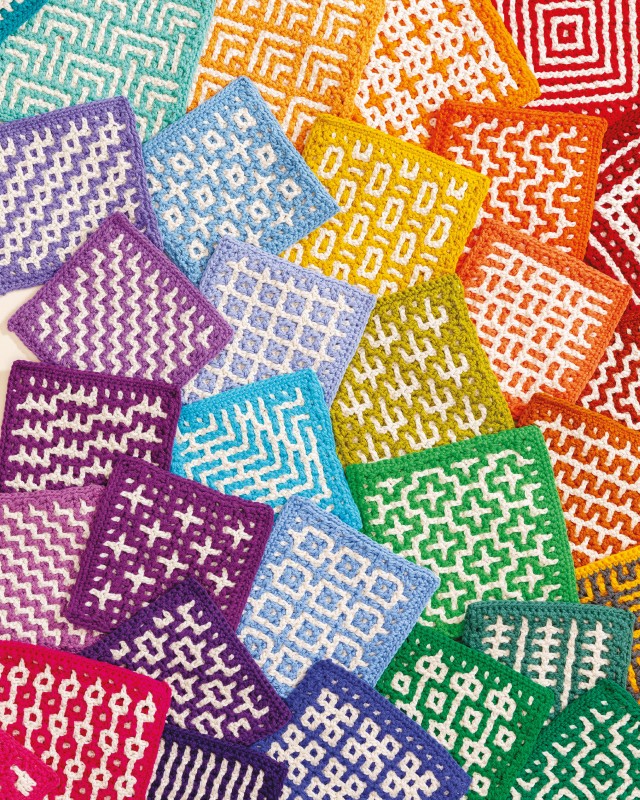
I wanted to create the resource I wished had existed when I first discovered this technique. Interlocking Crochet is a pattern collection, sure, but it’s also a complete handbook, walking you through the technique from the ground up with detailed step-by-step guidance, over 700 photographs, finishing tips, and a dedicated section on common mistakes to avoid. The 50 stitch patterns give you a library to draw from in your own projects, while the five project patterns show you exactly what the technique looks like in a finished, wearable piece.
What was the creative process like as you developed this book and each of the designs featured in it?
Lots of trial and error, and I mean that in the best possible way. Each stitch pattern was its own little adventure. With interlocking crochet, you’re working two layers simultaneously, which means the reverse side of the fabric often comes as a genuine surprise. Many times, I finished a swatch, flipped it over, and found something completely unexpected looking back at me, sometimes better than what I’d planned for the front. That element of discovery kept the whole process exciting from the first stitch to the last.
Each design was also tested by a team of talented crocheters, whose feedback shaped the final patterns in meaningful ways. You can see their beautiful work on my website, crochethighway.com, as well as on Ravelry.
What was the most exciting part of making this book?
Watching 50 individual stitch patterns come together as a cohesive collection. Each one started as an idea, became a swatch, went through rounds of testing and refinement, and eventually found its place in the book alongside the others. Seeing them all together, with the step-by-step photography and the finished projects, was the moment it stopped feeling like work in progress and started feeling like something real. That’s a feeling that doesn’t get old!
How would you describe the aesthetic of your designs in Interlocking Crochet?
Geometric and art deco inspired. I’ve always been drawn to bold, repeating patterns with clean lines and strong visual rhythm. Interlocking crochet checks every one of those boxes! There’s something deeply satisfying about a pattern that looks complex and intricate but is built entirely from the most fundamental crochet stitches. That contrast between apparent complexity and underlying simplicity is very much at the heart of my aesthetic.
What is your top tip for someone just starting out in crochet?
Break everything down into its simplest components. A sweater sounds intimidating until you realize it’s just a few basic shapes: a yoke, a body tube, and two sleeves. A complex stitch pattern sounds impossible until you see that it’s built from double crochets and chains.
Everything in crochet, no matter how advanced it looks, is made up of small, learnable steps. Focus on the step in front of you, not the finished object, and you’ll surprise yourself with what you can make.

What is the most challenging thing about being a crochet designer?
Having faith that the designs I come up with will resonate with people and not just with me. Designing is an inherently personal process, and there’s always a moment of vulnerability when you release something into the world and wait to see how it lands. You put a great deal of yourself into every pattern, and hoping that others will connect with it the way you did never quite gets easier, no matter how long you’ve been doing this.
What makes up for the challenges?
The crochet community, without question. The makers who share their finished projects, leave thoughtful feedback, and take the time to tell you that a pattern brought them joy, those moments make every difficult day worthwhile. This community is genuinely one of the warmest and most generous corners of the internet, and being a small part of it is something I’m grateful for every day.

What advice would you give to your beginner self?
Have more confidence in yourself. There were so many times early on when I hesitated to try something because I assumed it was beyond me. More often than not, I was wrong. Crochet rewards curiosity and persistence far more than it rewards natural talent. If something looks interesting, try it. You’ll figure it out, and even when you don’t get it right the first time, you’ll learn something useful in the process.
In one word, how would you describe Interlocking Crochet?
Limitless.
Interlocking Crochet is out now! Dive into this complete handbook for both beginners and experienced crocheters as it takes you through 50 reversible stitch patterns and five projects which are a perfect fit for the modern crocheter - order now at the link here!
About the Author

Ana-Maria Babanica
Ana-Maria Babanica is the creative mind behind CrochetHighway. Best known for her modern take on interlocking...