
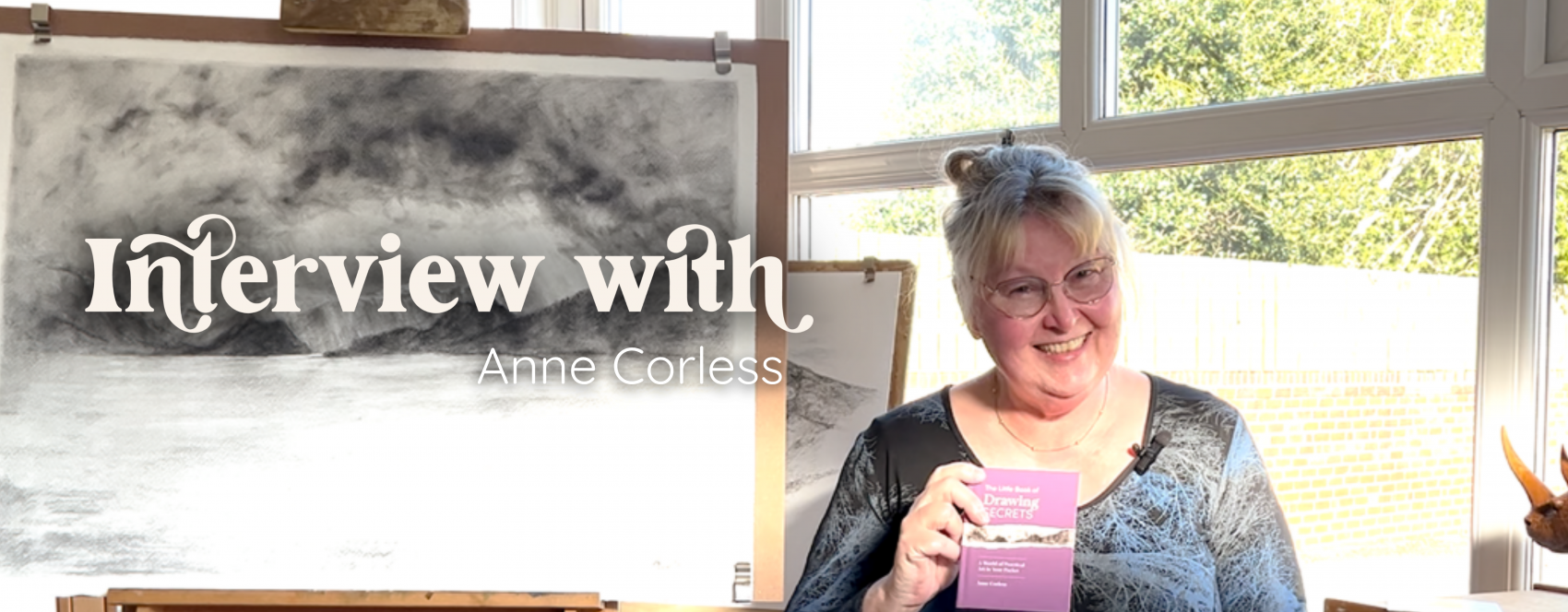
Meet Anne Corless, Author of The Little Book of Drawing Secrets!
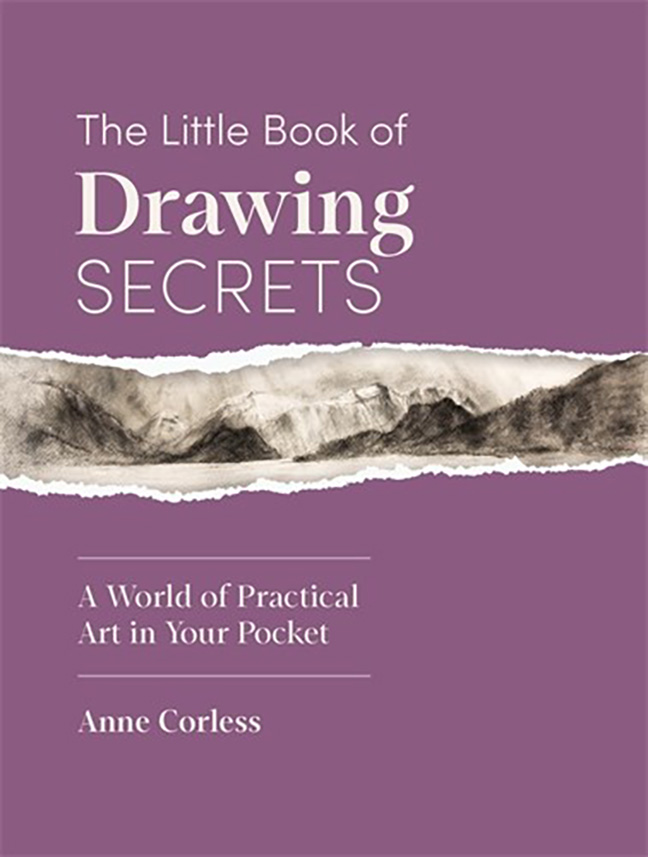
The Little Book of Drawing Secrets is a compact, easy-to-carry reference guide bursting with practical drawing tips, techniques and creative inspiration for artists of all levels!
This book is a go-to resource for all artists that covers everything that you need to bring more life, soul and detail to your art; join author and expert art tutor Anne Corless as we sat down to discuss her artistic journey, how The Little Book of Drawing Secrets came to be and more...
Tell us a bit about yourself.
As far back as I can remember I have enjoyed spending time being creative. I was born in Devon and lived on the Cornish coast for a few years, which is probably why I have always loved the sea. My parents were from Merseyside in the Northwest of England and this turned out to be just the beginning of a life of travel. We lived in different parts of the UK and in Nigeria, Australia and for 11 years in Kenya, which is where my passion for wildlife art comes from. From what I remember, I used to draw all the time, sometimes from life and othertimes from my imagination. I also wrote stories and poems. My creative influences were many, full of colour and dramatic light yet my artwork firmly remained tonal (black and white) for the longest time. I loved working with graphite pencils, charcoal and ink. I liked the detail I could achieve and the drama of different values (lights and darks) of an artwork without having to think about colour.
My career in healthcare resulted in more travel overseas and so with a busy working life, I thought of my art as a serious hobby, and I was always thrilled when I could use it to support wildlife conservation in some small way. The dream of wanting to do more with my art remained however, and eventually, when living back in the UK with a busy family life I returned to my studies. I gained a BA (Hons) degree in Design, specialising in Natural History and Scientific Illustration, followed by a post graduate qualification in Medical Art. As new creative oppportunites started to appear I became self-employed, which fitted in with family life. I worked on commissions and projects in art, illustration, design and medical art. I wrote about art for art magazines and blogs. When I began to be invited to teach on holidays, at events and workshops I studied for a qualification as an educator and trainer.
If it sounds busy…it has been, but I feel very fortunate that I was able to follow my love of art. And nowadays I work in all media…and I absolutely love working with colour!
Tell us a bit about The Little Book of Drawing Secrets.
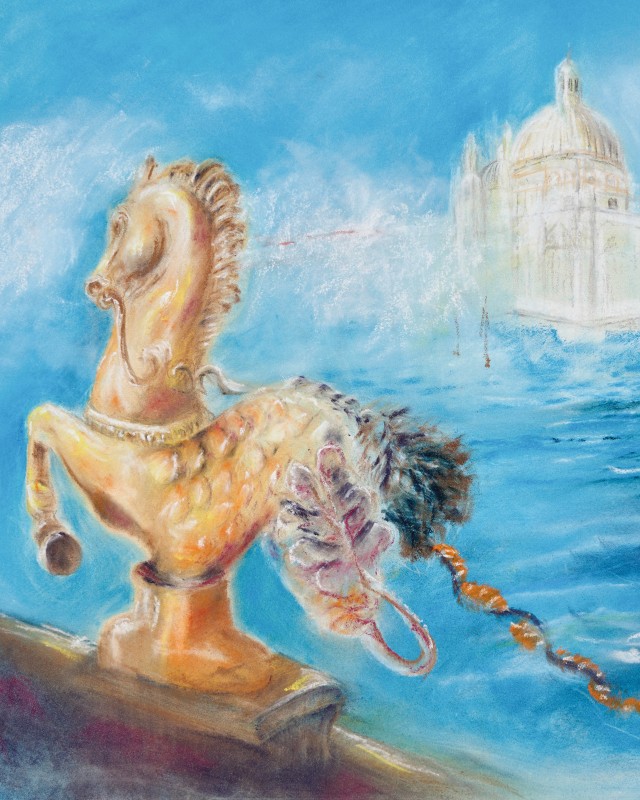
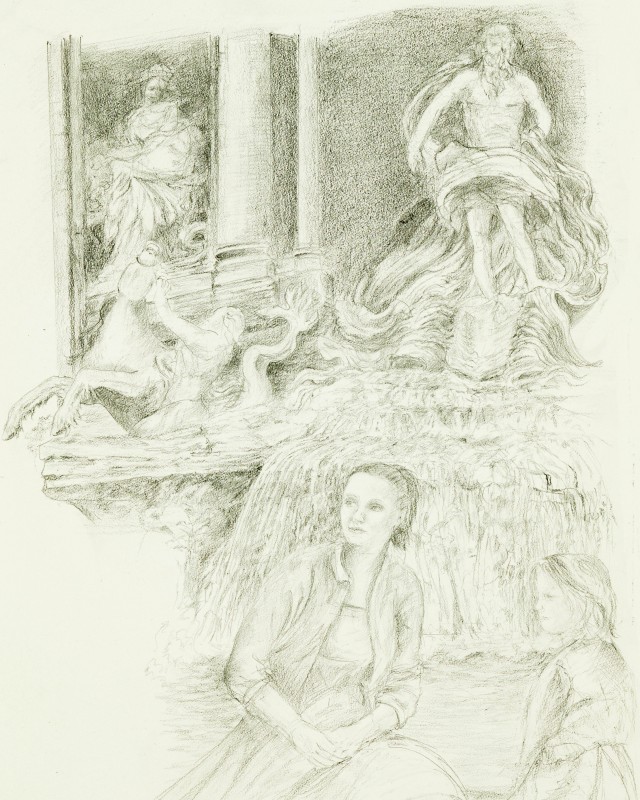
It’s a book packed full of information about art materials and techniques for anyone wanting to learn how to draw but more than, it has suggestions and tips on how to develop creativity. There is advice on how to choose subjects to draw, tips on observational drawing, insights into working with value (tonal value) and colour, suggested exercises to improve visual memory and encouragment to use memory and imagination in artwork, such as in my Venice artwork in chapter 5.
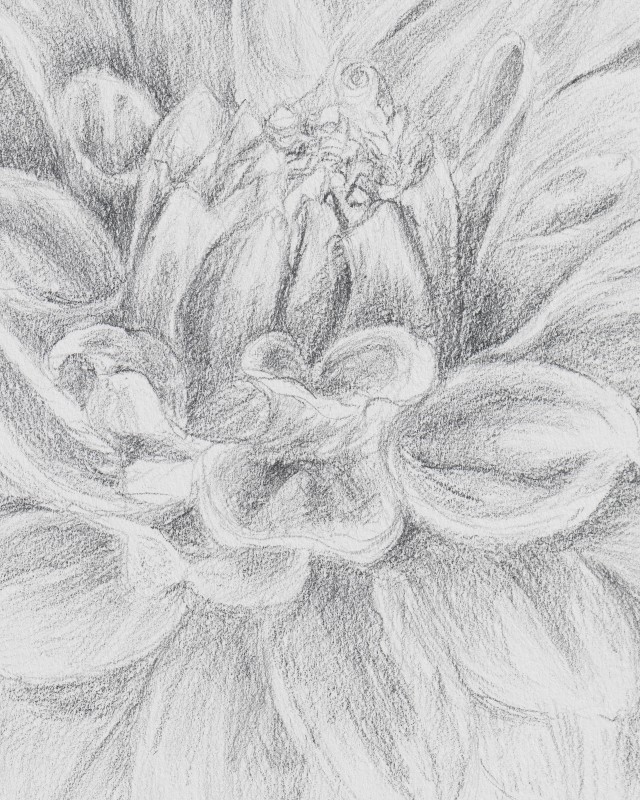
In my book I show different ways of mark making, depending on the situation. In chapter 4 I give examples of quick studies such as when trying to capture an island at sea using line and tone with a biro, and more precise mark making (I had a little more time) to describe an iceberg with line and hatching. In chapter 9 I describe a day out in the English countryside and show a range of drawing styles from scribbled sketches of a hovering bird of prey hunting, to a more considered landscape drawing in a small sketchbook and a more detailed artwork of the bird of prey on the ground.
What can artists get from The Little Book of Drawing Secrets that they can’t find elsewhere?
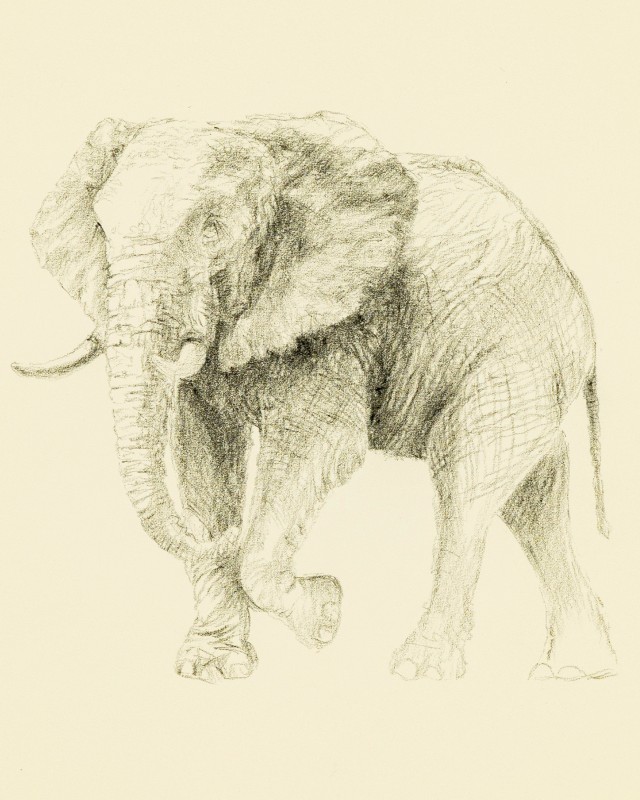
The book has an ethos of inspiring readers to make time in their lives to enjoy being creative…with advice on how to do just that! I suggest that it is easier to draw what you can see and understand, especially when you are starting out. The old teddy bear (ch.1&7) and the barn owl against a sky at sunset (ch.3) are examples of this. The rhino and birds artwork (ch. 1) shows how a mix of visual references can work in a composition. I did two drawings of rhinos; one was a measured drawing of an old wood carving and the other was from some very old photos …and I added a bit of imagination.
Most of all, in this book, I urge the reader to focus on their own artistic journey, to structure their own creative practice, to work at their own pace and not to be put off by anyone. It’s not anyone else’s creative journey!
What do you love about drawing in particular, as opposed to other artistic mediums?
All you need is a graphite pencil, charcoal or a pen and something to draw on. It’s accessible and versatile. You can doodle, sketch, apply tone, add texture, work with colour and create highly rendered artworks. Many careers require drawing skills such as working in design, illustration, animation. I have taught medical students anatomical drawing skills, demonstrating the wide appeal of learning to draw.
Drawing helps me come up with ideas. When I doodle or try to work out a composition with thumbnail drawings, ideas pop into my head, I have no idea how that happens!
What was the creative process behind The Little Book of Drawing Secrets like?
I planned of all the points I wanted to cover and then worked through them step by step. I created artworks for projects, but the writing came first and then as the art progressed, I added to more text. Working with the publisher’s editors was a lovely experience and really helped me to focus my ideas.
What’s your favourite chapter or section from the book?
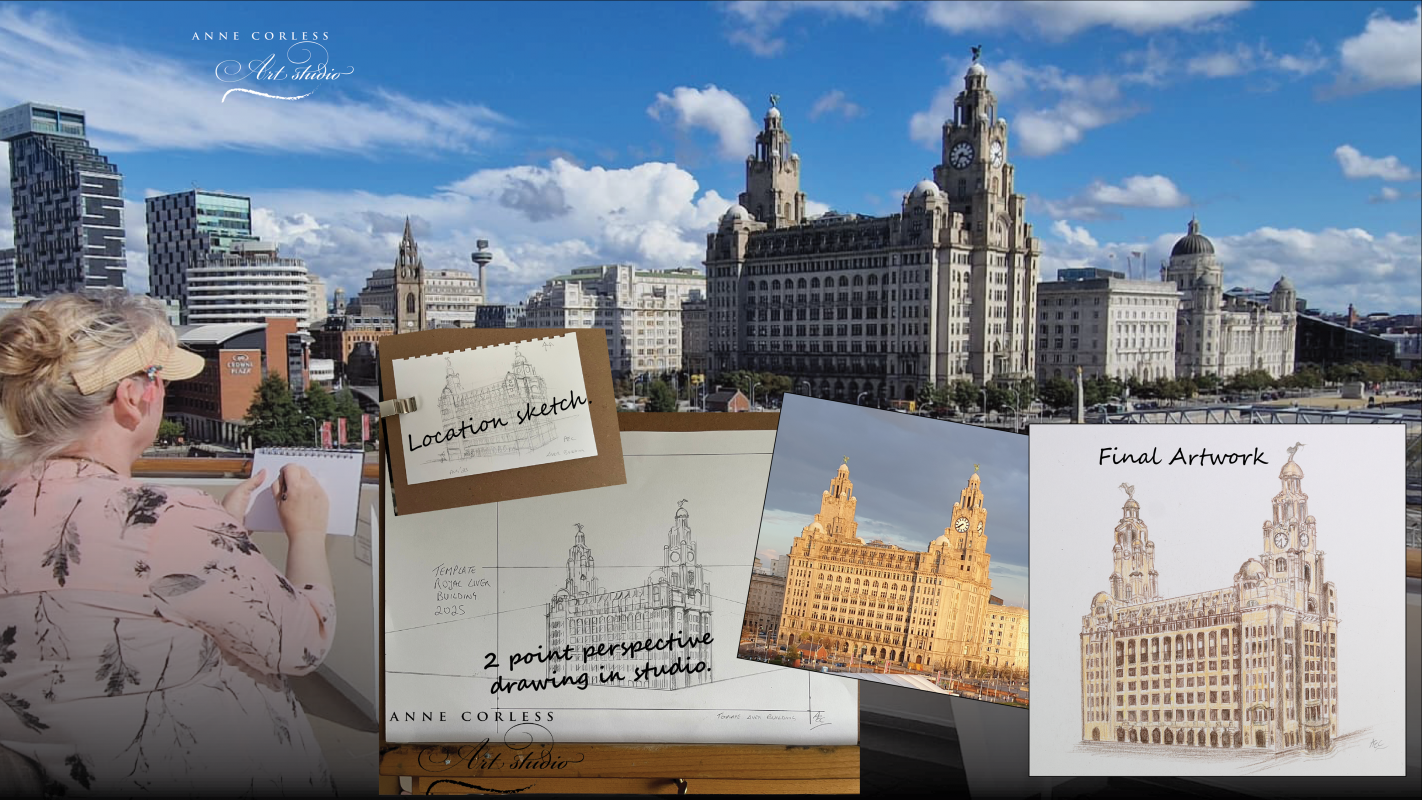
Oh, that’s difficult to answer because they were all so carefully thought out and I enjoyed working on them all! However, because I really like making artwork that requires a mix of research, working from life and then designing a composition back in the studio, I will choose the Liver Building in Liverpool (ch.9) It is a favourite because it required me to think about how to capture the changing light and colour as the grey granite of the building became bathed in golden sunlight, late one afternoon. I could simply have done a graphite pencil drawing but instead I chose to work on this piece further in the studio and drew the final design with coloured pencils. This phenomena of changing light on the building happens because light has to travel through more atmosphere (as the sun drops low in the sky) which causes the shorter blue wavelengths to scatter away. Turns out that I am now completely fascinated by colour!
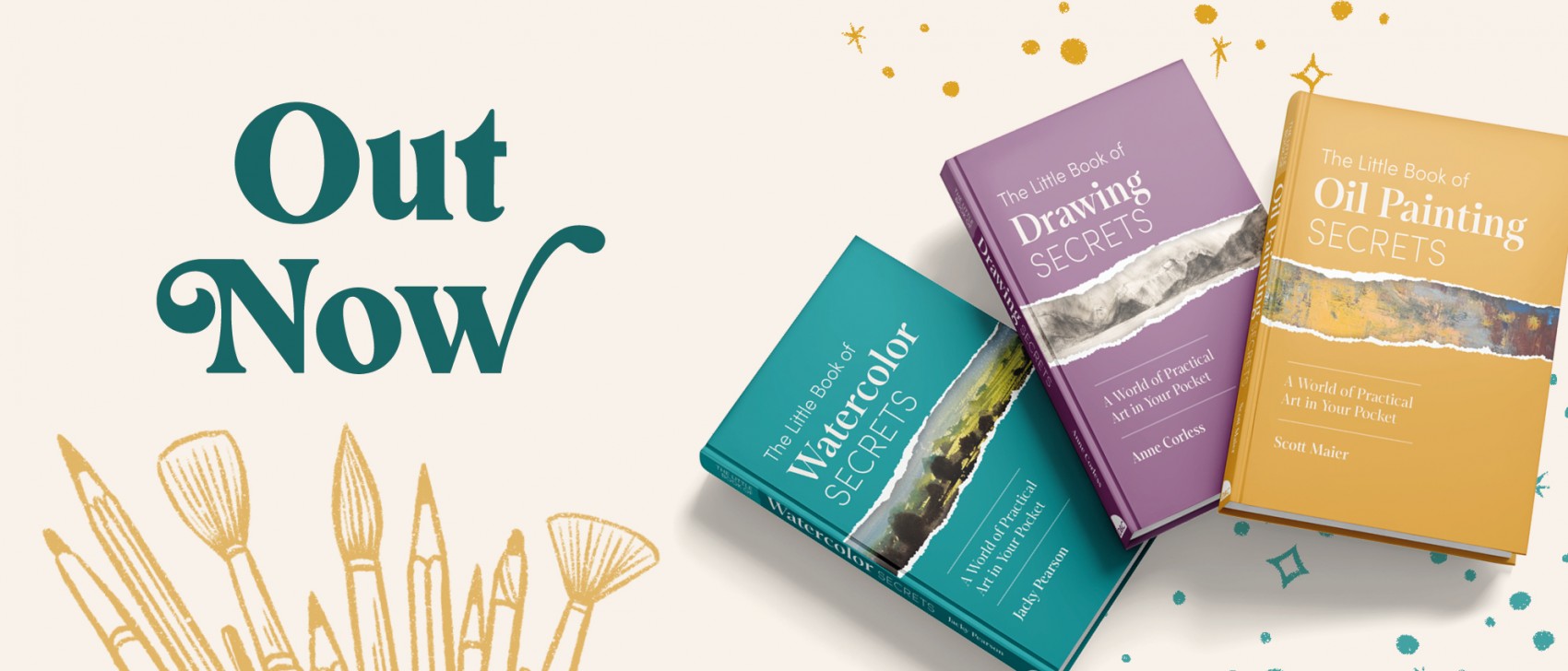
How does it feel to see The Little Book of Drawing Secrets alongside the other two books in the series?
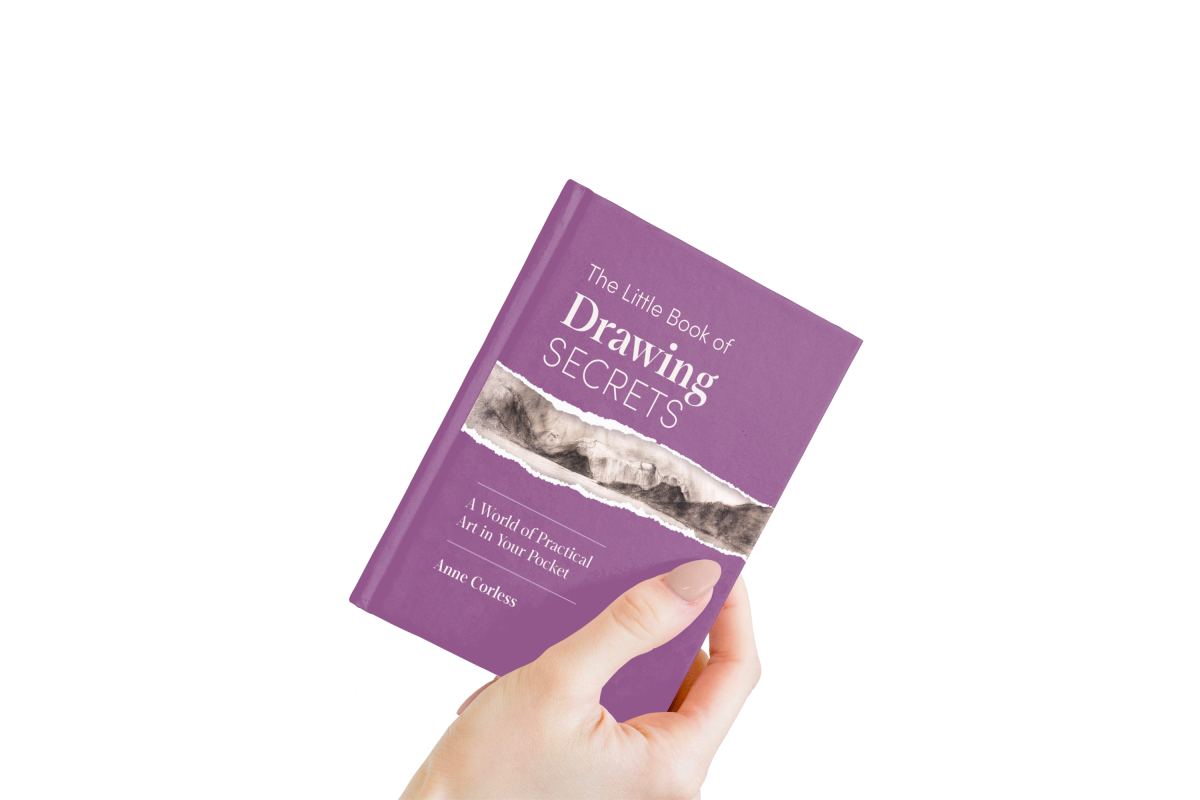
It’s really nice. I think the 3 books complement each other. In my view it is important to learn how to draw, especially working tonally at first. Drawing encourages a focus on important basic aspects of an artwork. When drawing with line you can observe and record shapes and proportions, best viewpoints and perspective. Tone can be added to show the value range of lights and darks. Quick thumbnail drawings are useful to decide on content, placement and value. It is lovely to be able to work with colour in different media, in my book I work with coloured pencils, pastel, ink and some watercolour. The other books give expert advice on how to work with watercolour and oils.
What originally inspired your interest in drawing and art, and how has this shaped your life?
I was always creative…it is just that living around the world from an early age channelled my interest in the natural world and wildlife.
When I became self-employed, I learnt a lot about the business of art by joining membership and trade organisations and art groups, becoming an active member. Having a workspace at home and being able to communicate via my computer means I can work with someone living in a very different time zone and so, especially in my work as a medical artist/ illustrator I have worked with clients around the world.
As a wildlife artist I have travelled around the UK. It has been fun to work as an Artist in Residence such as at Nature in Art in the UK in Gloucestershire. I also enjoyed spending time in London at the Jacksons Art Supplies studio, where I was filmed painting a wildlife artwork in watercolour. I have exhibited artwork in group shows and had solo exhibitions.
Through my involvement with the Fine Art Trade Guild, I have given lectures and presentations at conferences and events such as at the Spring Fair International at The NEC in Birmingham, at the Guild’s Annual Conferences and at Making Pictures events around the UK. In recent years I have been an Artist in Residence at the Guild’s annual Art+Print+Frame Expos.
I have taught art workshops at BBC Radio Merseyside with Up 4 Arts and the Campaign for Drawing. I designed wall friezes for the UK’s first mobile cancer unit and project managed the project, using artwork of Liverpool landmarks, created by workshops attendees (that I taught) at BBC Radio Merseyside, for Clatterbridge Cancer Centre. I was very honoured to be recognised for my work with a plaque on the wall. I have been Resident Artist with BBC Radio Lancashire, doing live interviews, teaching creative skills and painting to groups in the radio studios (and the DJs!) and have taught and demonstrated on outdoor broadcasts.
I have also done live demonstrations such as in portraiture and wildlife art and exhibited artwork at events for The Prince’s Trust.
I have taught workshops for Derwent and Leisure Painter magazines. As a Derwent Ambassador I spent many years teaching workshops at the “magical” Pencil Museum in Keswick and I represented Derwent Art at Patchings Art Fest in 2013 and 2023. More recently I did a live plein air landscape art demonstration for John Lewis and Partners at a National Trust property, with Derwent Art (and filmed and edited a separate artwork video for John Lewis and Partners.)
I have taught painting on specialist art holidays and for the past 12 years, one of my most enjoyable roles has been working on cruise ships, both as an Artist in Residence and as a watercolour instructor. I love going on these adventures, especially when I can collaborate with wildlife organisations such as ORCA.
As a writer I have written numerous articles about art for Leisure Painter magazine and the Guild’s Art + Framing Today magazine.
And…this last year or so I have loved spending time working on my book!
What would you say is the most challenging part of being an artist?
Whether it’s a hobby or your profession, I think the challenge is to allow enough time for each art project you start...and not to worry when things don’t work out. It really is just one step on your artistic journey.
What makes up for those challenges?
I have always found it very helpful and fun to belong to art groups and membership organisations. There will always be challenges, so it is nice to have friends and colleagues in the artwork to talk to.
Who (dead or alive) would you invite to your perfect drawing retreat?
Can I invite more than one? When researching this book I was drawn to the Golden Age of the High Renaissance in Italy and was reminded that Leonardo Da Vinci, Michelangelo and Raphel all did detailed preparatory drawings before painting. The drawings are dynamic, unique and utterly mesmerizing. So, all three of them!
In one word, how would you describe The Little Book of Drawing Secrets?
Inspiring.
What are you waiting for? Embark on your own artistic journey and order The Little Book of Drawing Secrets today at the link here!
(Looking to get into watercolor or oil painting? You can order The Little Book of Watercolor Secrets by Jacky Pearson and The Little Book of Oil Painting Secrets by Scott Maier from the links here and here!)
About the Author

Anne Corless
Based in Lancashire, England, Anne Corless has had a busy and rewarding career working as an Artist,...